Why Venezuela and the United States Are in Conflict: A Full Background
Why Venezuela and the United States Are in Conflict: Oil, Sanctions, and Power

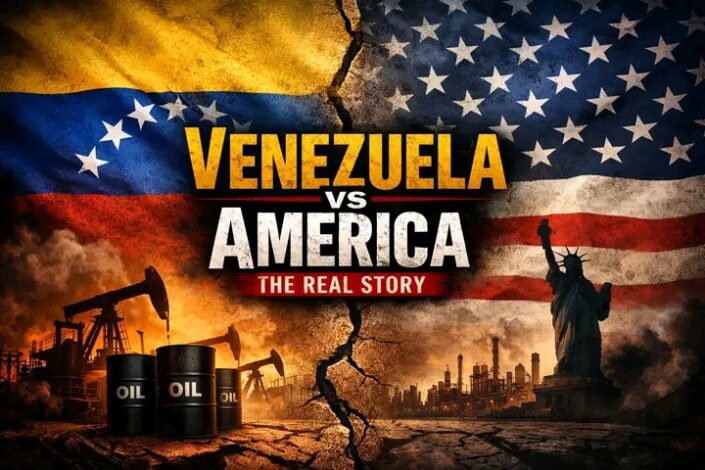
Why Venezuela and the United States Are in Conflict: A Full Background
” Why Venezuela and the United States Are in Conflict: A Full Background?”
For many years, Venezuela and the United States maintained a cooperative relationship, mainly because of oil. Venezuela is one of the world’s richest countries in oil resources, and the U.S. depended heavily on Venezuelan crude to fuel its economy. American companies operated freely in the country, and diplomatic ties were stable.
However, this relationship changed dramatically at the end of the 1990s with the rise of Hugo Chávez.
The Chávez Era and a Shift in Direction
When Hugo Chávez became president in 1999, he introduced a new political vision rooted in socialism and national independence. Chávez believed Venezuela’s wealth had long benefited foreign powers instead of ordinary citizens. As a result, he placed the oil industry under government control and reduced the influence of foreign companies, including those from the United States.
At the same time, Chávez openly criticized U.S. foreign policy and aligned Venezuela with countries that opposed American dominance, such as Cuba, Russia, China, and Iran. This ideological shift created tension, as the United States viewed Chávez as a threat to its political and economic influence in Latin America.
Growing Hostility and Political Distrust
Tensions deepened after a failed coup attempt against Chávez in 2002. Although Chávez returned to power quickly, he accused the United States of supporting efforts to remove him. From that moment, mutual trust collapsed, and relations became openly hostile.
After Chávez’s death in 2013, Nicolás Maduro assumed leadership. Under his rule, Venezuela faced severe economic decline caused by falling oil prices, poor management, and widespread corruption. Shortages of food, fuel, and medicine followed, forcing millions of citizens to flee the country.
Sanctions, Power Struggles, and Oil Politics
The United States responded by imposing economic sanctions, arguing that they were necessary to pressure Venezuela’s leadership to restore democracy. Venezuela, on the other hand, claims the sanctions worsened the humanitarian crisis and were designed to weaken the government.
In 2019, the conflict escalated when the U.S. recognized opposition leader Juan Guaidó as Venezuela’s legitimate president, a move rejected by Maduro and the military.
The Core of the Conflict
At its heart, the dispute between Venezuela and the United States revolves around oil control, political ideology, and global influence. While the U.S. seeks stability and democratic reforms, Venezuela demands sovereignty and freedom from foreign pressure.
So,now this why Venezuela and the United States Are in Conflict, A Full Background